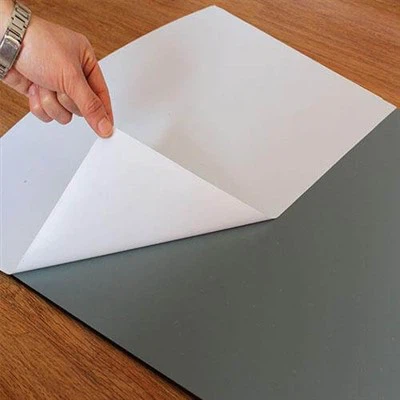
Hey there! As a supplier of Protective Film Galvanized Steel Coil Film, I often get asked whether the protective film on galvanized steel coil affects the formability of the steel. It's a great question, and today, I'm gonna dive deep into this topic.
First off, let's understand what formability means in the context of galvanized steel. Formability refers to the ability of the steel to be shaped into different forms without cracking or breaking. This is super important in industries like automotive, construction, and manufacturing, where steel is often bent, stamped, or drawn into various shapes.
Now, let's talk about the protective film. The main purpose of the protective film on galvanized steel coil is to prevent scratches, abrasions, and corrosion during transportation, storage, and handling. It acts as a barrier between the steel surface and the external environment. But does it have an impact on formability?
Positive Effects of Protective Film on Formability
In some cases, the protective film can actually enhance the formability of the galvanized steel. The film can provide additional lubrication during the forming process. When the steel is being bent or shaped, the film reduces the friction between the steel and the forming tools. This means that the steel can be deformed more easily, and there's less chance of surface damage.
For example, in a stamping operation, the protective film can act as a cushion, preventing the sharp edges of the stamping die from directly contacting the steel surface. This reduces the risk of cracks and tears, allowing for a smoother and more precise forming process.
Negative Effects of Protective Film on Formability
However, there can also be some negative effects. If the protective film is too thick or has a high adhesive strength, it can cause problems during forming. A thick film may not conform well to the shape of the steel during deformation, leading to wrinkles or folds. These wrinkles can interfere with the forming process and may even cause the film to peel off prematurely.


High adhesive strength can also be an issue. If the film sticks too tightly to the steel surface, it can resist the deformation of the steel. This can result in uneven stretching or tearing of the film, which can then transfer to the steel surface and cause defects.
Factors to Consider
Several factors need to be considered when evaluating the impact of the protective film on formability.
Film Thickness
As mentioned earlier, the thickness of the film plays a crucial role. Thinner films are generally more flexible and can conform better to the shape of the steel during forming. They are less likely to cause wrinkles or folds. On the other hand, thicker films may provide better protection but can be more challenging to work with during forming.
Adhesive Strength
The adhesive strength of the film should be carefully selected. It should be strong enough to stay in place during transportation and storage but not so strong that it hinders the forming process. A good balance is needed to ensure that the film provides adequate protection without affecting formability.
Film Material
The type of material used for the protective film also matters. Different materials have different properties, such as flexibility, stretchability, and chemical resistance. For example, a polyethylene film is known for its good flexibility and low cost, while a polyester film may offer better chemical resistance and higher strength.
Our Solutions
At our company, we offer a wide range of Protective Film Galvanized Steel Coil Film products that are designed to balance protection and formability. We have films with different thicknesses and adhesive strengths to meet the specific needs of our customers.
For applications where formability is a top priority, we recommend our thinner films with moderate adhesive strength. These films provide sufficient protection while allowing for easy forming. On the other hand, for applications where maximum protection is required, we offer thicker films with higher adhesive strength.
We also have Low/High Temperature Insulated Panel Self Adhesive Protection Film that can be used in extreme temperature conditions. This film is designed to maintain its properties even in harsh environments, ensuring long-lasting protection for the galvanized steel.
In addition, our Protective Tape for Metal Surfaces, Clear Self Adhesive Film with Clean Removal is a great option for applications where a clean and easy removal is required. It leaves no residue on the steel surface after removal, which is important for maintaining the quality of the finished product.
Conclusion
In conclusion, the protective film on galvanized steel coil can have both positive and negative effects on formability. It all depends on the properties of the film, such as thickness, adhesive strength, and material. By carefully selecting the right film for your specific application, you can ensure that the steel is well-protected while still maintaining good formability.
If you're in the market for high-quality protective film for your galvanized steel coil, we'd love to hear from you. Whether you're a small manufacturer or a large industrial company, we have the products and expertise to meet your needs. Contact us today to discuss your requirements and let's work together to find the best solution for you.
References
- Some industry reports on metal protection films
- Technical data sheets of our protective film products